An in-service water tank ROV inspection must satisfy more than underwater visibility. The owner needs a sanitary-control plan, approved equipment introduction and recovery, stable tank-zone naming, controlled vehicle and tether movement, sediment protection, traceable media, explicit coverage gaps, and a defined path to structural, coating, cleaning, or water-quality follow-up.
Table of Contents
- 1. Obtain Owner and Regulatory Approval Before Mobilization
- 2. Divide the Tank Into Persistent Inspection Zones
- 3. Control Equipment Introduction, Movement, and Recovery
- 4. Collect Context Before Close Detail
- 5. Describe Observations Without Overstating Condition
- 6. Reconcile Coverage and Restore the Asset
- 7. FAQs
1. Obtain Owner and Regulatory Approval Before Mobilization
Confirm the tank, water system, operating state, inspection purpose, governing requirements, responsible water authority, access control, isolation options, water-quality plan, sanitary procedure, incident response, and approval roles. Do not assume that an in-service method permitted for one utility is acceptable to another.
The EPA’s finished-water storage tank inspection and cleaning checklist illustrates the breadth of asset components and photographic documentation expected in a structured review. Use the owner’s current forms and rules; the ROV is a collection method, not the inspection authority.
Define conditions that stop the work: sanitary-control breach, loss of vehicle control, damaged tether, unexpected water condition, disturbed sediment beyond the approved limit, equipment leak, inaccessible recovery path, or an operational change directed by the owner.
2. Divide the Tank Into Persistent Inspection Zones
Build a zone register from drawings and field confirmation. Use identifiers that remain stable between inspections, such as floor sectors, wall clock positions and elevation bands, roof sectors, named columns, ladders, seams, penetrations, inlet, outlet, overflow, and other appurtenances.
| Tank zone | Inspection question | ROV evidence | Escalation example |
|---|---|---|---|
| Floor sectors | Sediment, debris, visible coating or surface condition | Controlled video, stills and depth/location context | Sampling, cleaning or drained inspection |
| Wall courses and seams | Visible discontinuity, staining or coating change | Repeatable passes with scale where valid | Coating specialist or contact test |
| Columns and bracing | Visible condition and connection context | Multiple views with stable ID | Structural review |
| Inlet/outlet area | Obstruction, deposits and accessible geometry | Sonar context plus close visual | Isolation and maintenance |
| Roof underside/appurtenances | Accessible visible condition | Upward-looking camera and zone record | Alternate access or drained inspection |
Mark excluded and inaccessible surfaces before the dive where possible. Afterward, report actual coverage rather than implying that a video duration represents the whole tank.
3. Control Equipment Introduction, Movement, and Recovery
List everything crossing the sanitary boundary: vehicle, tether, reel, fairlead, camera, sonar, tools, fasteners, weights, covers, and handling equipment. Record inspection, cleaning or disinfection method required by the owner, materials compatibility, pre-entry custody, and post-recovery reconciliation.
Plan the launch path and tether route so equipment does not damage hatches, coatings, ladders, or appurtenances. Avoid dragging the tether across sediment or sensitive surfaces. Establish a recovery method for propulsion, video, power, or command failure without introducing unapproved equipment.
Keep the vehicle away from inlet or outlet flows and any operating state that could create suction, entrapment, unexpected movement, or loss of control. Coordinate every change with the facility operator.
4. Collect Context Before Close Detail
Capture tank identity, entry point, water level or approved reference, initial water appearance, and a recognizable sequence into each zone. Use slow, repeatable tracks and narrate or tag stable IDs. Take context, medium, and detail views so a reviewer can locate every observation.
In low visibility, control lighting and standoff as described in the turbid-water ROV camera guide. Imaging sonar may support navigation, wall/floor geometry, appurtenance location, and target reacquisition, but it does not by itself establish coating type or structural severity.
5. Describe Observations Without Overstating Condition
Record visible appearance, location, scale method, view direction, media IDs, water and lighting condition, confidence, and limitation. Terms such as corrosion, delamination, crack, structural deformation, or microbiological growth may require a qualified reviewer or another test. Use neutral observation language until the evidence supports classification.
Separate sediment coverage from a measurement of sediment depth. If a scale, sonar, probe, or sample is used, document its method and uncertainty. Do not disturb deposits merely to improve imagery unless the owner has approved the action and its water-quality implications.
Route findings to categories such as no visible indication, observation, indeterminate, re-inspect, specialist review, cleaning, repair planning, or urgent owner notification. The owner defines consequence and response.
6. Reconcile Coverage and Restore the Asset
Before demobilization, reconcile planned zones, actual paths, media, findings, unusable areas, dropped or missing items, equipment condition, and owner instructions. Recover and account for all equipment. Follow the approved hatch, access, restoration, sampling, and return-to-service process.
Deliver a zone map, coverage statement, media index, finding register, sanitary-control record, equipment configuration, environmental conditions, exceptions, limitations, and recommended next method. Preserve original media and create annotated copies as derivatives.
USACE guidance recognizes ROVs as one option within underwater inspection planning, but the qualified owner and engineer still determine whether remote evidence answers the asset question.
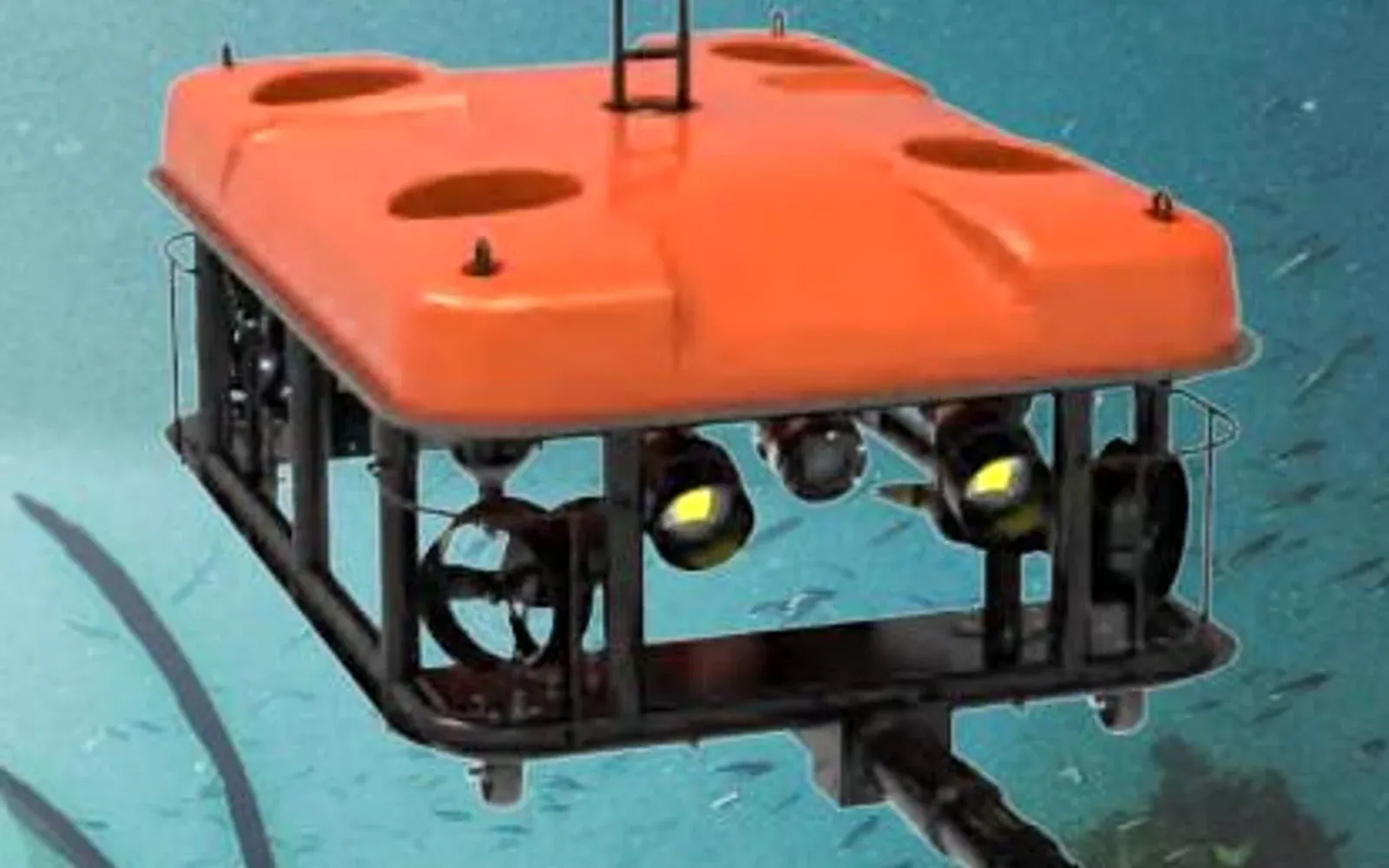
Review the G70 inspection ROV and SNR-C400 imaging sonar against the owner’s approved procedure. The underwater category, critical-infrastructure solution, and resource center support the coverage and evidence package.
7. FAQs
Can an ROV inspect a drinking-water tank without draining it?
It may be possible under an owner-approved, jurisdiction-specific procedure, but sanitary, operational, water-quality, equipment, disinfection, access, and restoration requirements must be established before deployment.
What tank areas should an ROV inspection cover?
The plan can include floor, wall courses, roof underside, columns, ladders, seams, welds, penetrations, inlet and outlet areas, overflow, appurtenances, sediment, and owner-defined inaccessible zones.
Can an ROV replace every water tank inspection method?
No. Coating adhesion, thickness, structural assessment, inaccessible surfaces, sampling, cleaning, repair, and some regulatory requirements may need divers, drainage, contact methods, or another qualified inspection.