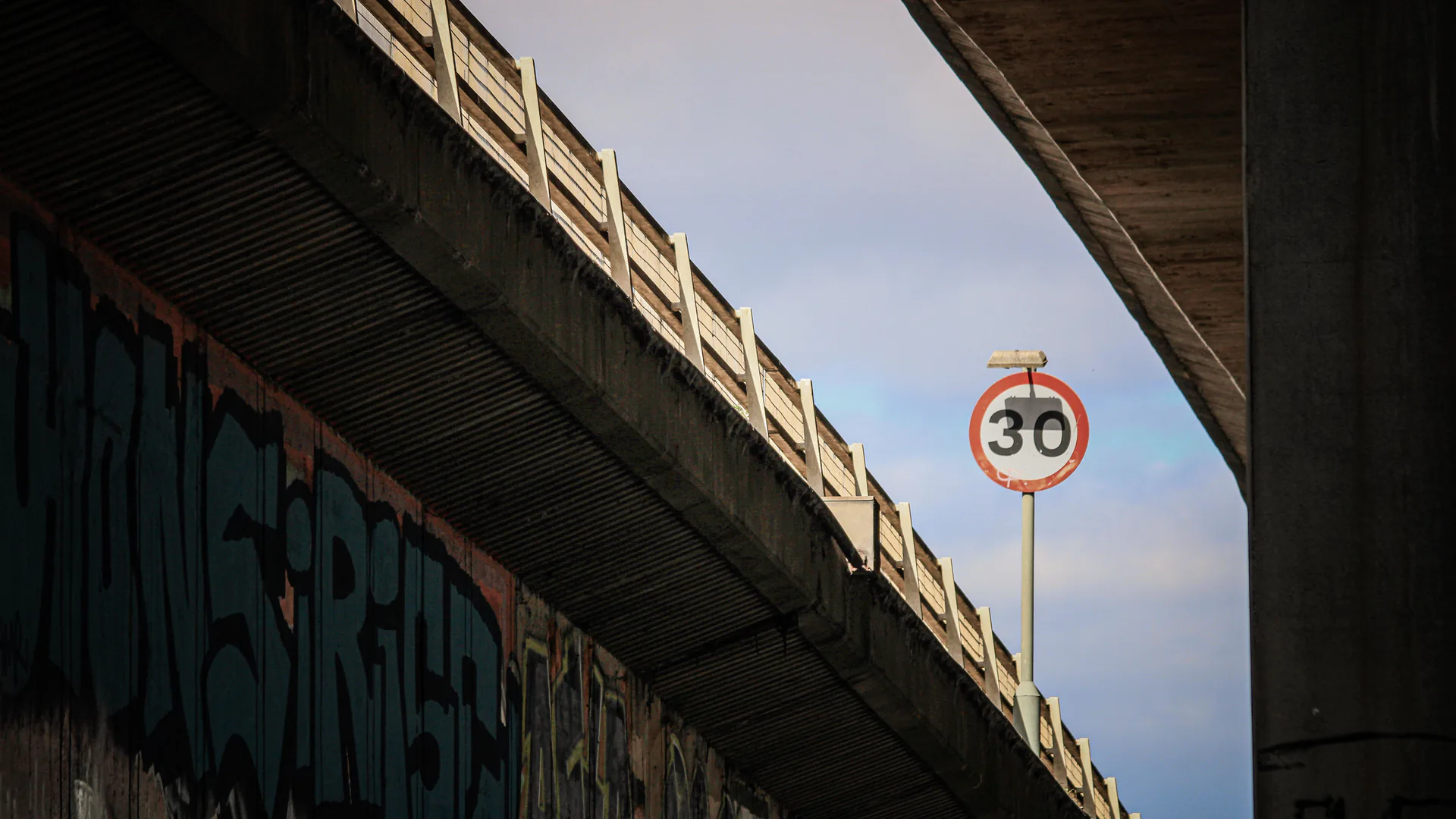
Automated speed enforcement is not a camera attached to a radar. It is a governed measurement and case workflow: lawful authority, site selection, traceable speed measurement, correct vehicle association, reviewable evidence, human decisions, notices, retention and independent oversight.
Table of Contents
- Define the Safety Problem, Authority, and Owner
- Separate Measurement, Imaging, and Case Creation
- Specify the Evidence Package and Audit Trail
- Design Siting, Calibration, and Secondary Checks
- Build Privacy, Cybersecurity, and Retention Controls
- Put Human Review and Public Oversight in Scope
- Accept the Full Program Before Issuing Cases
- FAQs
Define the Safety Problem, Authority, and Owner
Begin with the road-safety problem: speeding-related crashes, excessive operating speeds, a school or work zone, or another documented risk. Name the public agency that owns the program, the legal authority, permitted locations and operating conditions, decision maker, funding model and measures of success.
Requirements vary by U.S. state and locality. A procurement document should not assume that a system accepted in one city can issue cases in another. Counsel and the responsible agency must interpret enabling law, notice, evidence, service, adjudication and records rules. Publish the program purpose and site-selection method before equipment obscures those choices.
FHWA’s Speed Safety Camera Program Planning and Operations Guide describes speed safety cameras as one part of comprehensive speed management and emphasizes community input, reliability, accountability and agency oversight. That is a stronger design basis than starting with the number of citations a device can produce.
Separate Measurement, Imaging, and Case Creation
Document the system as independent but synchronized layers. The speed sensor measures and tracks. Imaging records the associated vehicle and scene. Case logic applies configured thresholds and eligibility rules. A reviewer decides whether the evidence package is complete. The back office manages notice, contest, payment or disposition and records.
| Layer | Required input | Output | Acceptance evidence |
|---|---|---|---|
| Speed measurement | Defined lane geometry, timing and calibrated sensor | Speed, direction, track and quality state | Comparison with traceable reference across lanes and speeds |
| Vehicle association | Synchronized track and image geometry | Correct vehicle and lane relationship | Dense-traffic and adjacent-lane association trial |
| Evidence capture | Trigger, scene and plate views | Original evidence package | Readability, context, timestamps, integrity and missing-data behavior |
| Case rules | Authorized threshold and exclusions | Candidate case or documented rejection | Version-controlled logic and boundary tests |
| Human review | Complete candidate and policy | Approve, reject or escalate | Reviewer qualifications, audit log and sampled agreement |
| Back office | Approved case and identity process | Notice and final disposition | End-to-end reconciliation and contest record |
Do not use an image to repair an uncertain speed-to-vehicle association after the fact. The system should expose track quality, lane relationship and synchronization so a reviewer can reject ambiguity. A radar accuracy figure alone does not establish that the correct car received the measured speed.
Specify the Evidence Package and Audit Trail
Define the original evidence objects and preserve them. A package may include overview and plate images, speed and direction, lane and track record, site and device ID, time source, threshold and rule version, device health, calibration status, reviewer action and a cryptographic integrity mechanism where the program requires it.
The view should show enough road context to understand vehicle association and applicable signage without collecting unnecessary surrounding data. Record any enhancement separately from the original. If automated plate reading is used, retain the read confidence and human correction rather than overwriting history.
Every change needs an identity: device configuration, lane map, threshold, software, clock source, reviewer decision, redaction and case export. Audit logs should be protected from ordinary case editing and available to the public agency—not only to the vendor.
Design Siting, Calibration, and Secondary Checks
Survey each site for posted limit, sign visibility, lane geometry, curves, grades, merging, occlusion, reflective objects, roadside safety, power, communications and maintenance access. Create a versioned site drawing and installed survey. Revalidate after road work, pole movement, sensor impact, lane changes or unexplained statistics.
Calibration and field checks must follow the jurisdiction’s accepted method. Specify reference traceability, tested speeds and lanes, tolerance, environmental conditions, responsible personnel, interval and failure response. Keep commissioning, periodic and event-triggered checks distinct.
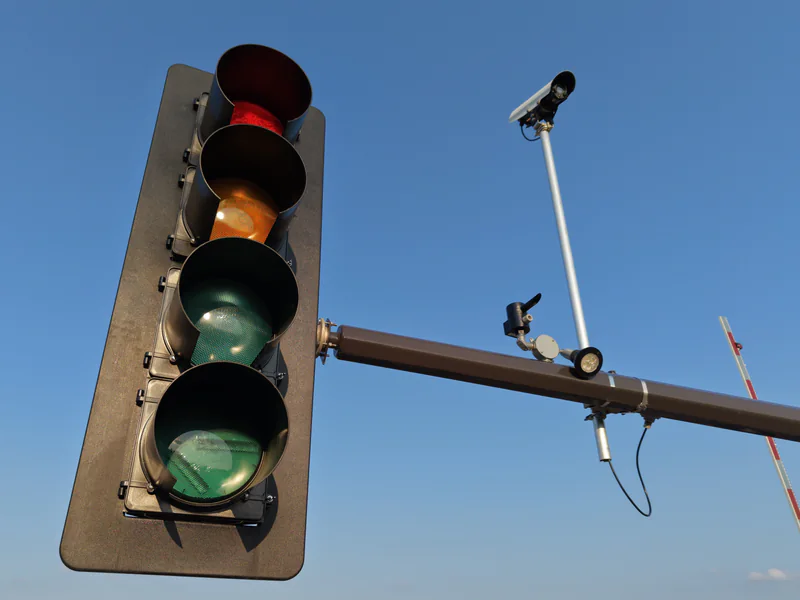
Test adjacent vehicles, lane changes, large-vehicle occlusion, motorcycles, nighttime headlights, rain and restart. Where a secondary check is legally or procedurally required, define how it is derived and what discrepancy rejects the case. The 3D traffic sensor guide explains lane mapping and track acceptance; enforcement adds a stricter evidence and governance layer.
Build Privacy, Cybersecurity, and Retention Controls
Collect the minimum information authorized for the safety purpose. Separate device administration, reviewer, adjudication, support and audit roles. Encrypt data in transit and at rest, require strong authentication, control remote service, inventory certificates and keys, and record exports and deletions.
Retention should follow case state and law. Non-violation passes may need a much shorter life than approved or contested cases. The agency should control the schedule, legal holds and verified deletion, including vendor replicas and backups. Contracts should prohibit unrelated model training, advertising or resale and provide a usable export at termination.
Prepare for disconnected operation and compromise. Define whether cases pause, store locally or reject when time synchronization, calibration status, camera health or secure transfer is unavailable. A system should fail visibly and conservatively rather than continue creating plausible but unverifiable cases.
Put Human Review and Public Oversight in Scope
Train reviewers to assess vehicle association, image completeness, signs, plate interpretation, exemptions, threshold, calibration status and duplicate cases. Track rejection reasons and sample approvals for independent quality assurance. Automation can prioritize and assemble; accountable decisions still require a governed process.
Make the public interface understandable. Explain purpose, sites, warning period, data handling, how to contest a notice and how revenue is governed. Report safety outcomes, operating speeds, cases, rejection reasons, error corrections, complaints and system availability with enough context to prevent misleading comparisons.
FHWA’s speed safety camera FAQ and proven safety countermeasure page provide program context. They do not replace the local authority and procedures that determine whether a particular case is enforceable.
Accept the Full Program Before Issuing Cases
Run a shadow period that does not issue penalties. Build a stratified sample across lanes, speeds near the threshold, traffic density, vehicle classes, day and night, weather and known edge cases. Score speed error, vehicle association, plate and context usability, case completeness, reviewer agreement, false-case prevention and delivery latency separately.
Trace cases from roadside event through approval, notice, contest, disposition, retention and deletion. Reconcile counts at every layer. Exercise calibration expiry, clock loss, camera obstruction, communications outage, configuration change and vendor-admin access. Define which failures stop case generation automatically.
The TRVF-8221-SW2 speed-enforcement reference and TRVF-8221 radar-video platform can be compared within the smart transportation portfolio. For an end-to-end acceptance matrix, contact OMNI UXV with the authority, site geometry, evidence rules, interfaces and oversight model.
FAQs
Is an automated speed enforcement camera the same as a traffic-monitoring camera?
No. A monitoring camera may support traffic awareness, while an enforcement system must meet the jurisdiction's measurement, evidence, review, notice, security, records and contest requirements. A similar enclosure does not establish enforcement suitability.
What calibration records should a speed enforcement system retain?
Retain device identity, measurement configuration, traceable reference method, test conditions, results, responsible person, date, validity period, maintenance and any event that triggered reinspection or recalibration. Requirements vary by jurisdiction.
Why is human review needed in automated speed enforcement?
A trained reviewer can check vehicle association, plate evidence, signs, exemptions, image quality and case completeness before a notice is issued. The review decision and any rejection reason should remain auditable.
How should privacy be designed into a speed safety camera program?
Collect only data needed for the authorized purpose, restrict access, encrypt transfers and storage, define short and defensible retention, log every action, control vendor use and publish understandable policies and performance reports.